
Critical infrastructure, AI security and cyber geopolitics take centre stage on Day 2 of GISEC Global 2026
From ICS/OT security to autonomous SOCs and cyber diplomacy, experts confront threats redefining national and industrial resilience
Dubai, UAE, September 17, 2026:
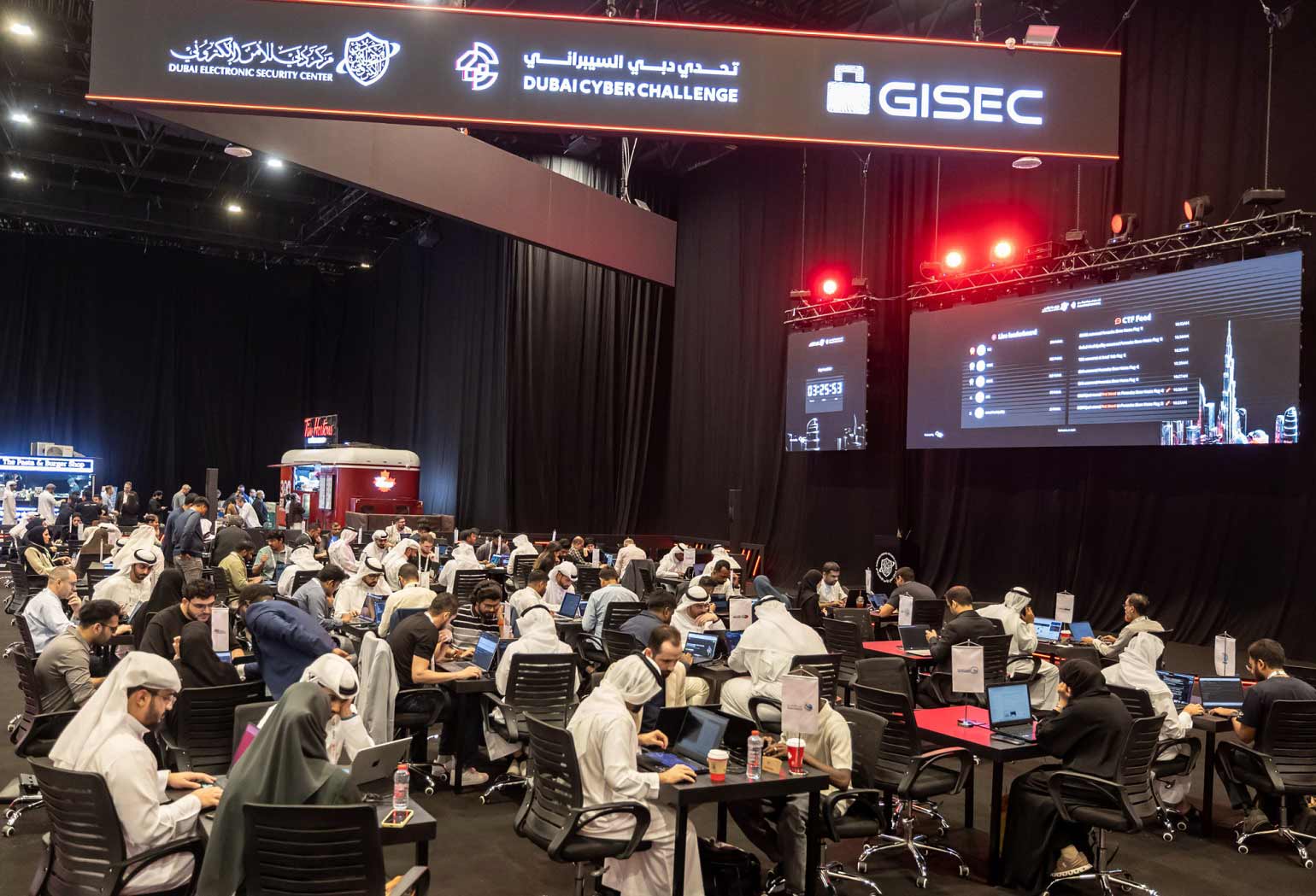
Critical infrastructure, AI-powered security operations and the geopolitical dimensions of cyber conflict took centre stage on the second day of GISEC, as government leaders, cybersecurity experts and enterprise practitioners examined how increasingly connected digital environments are changing the nature of national and industrial risk.
Held at Dubai Exhibition Centre (DEC), Expo City Dubai, under the theme Cyber First: The New Digital Order, GISEC Global 2026 is hosted by the UAE Cyber Security Council, with the Dubai Electronic Security Center (DESC) participating as the event's official Government Cybersecurity Partner. The event is also supported by the Ministry of Interior and Dubai Police. Running until September 18, GISEC Global welcomes participants from 182 countries, serving as a global convergence point for government leaders, national cyber authorities, enterprise CISOs, technology innovators, ethical hackers and the next generation of cybersecurity professionals.
Critical infrastructure: when cyber risk becomes operational risk
Day 2 opened with a deep dive into real-world industrial control system (ICS) and operational technology (OT) incidents, examining how vulnerabilities across human-machine interfaces, programmable logic controllers, safety systems and other critical infrastructure can translate into operational and physical consequences.
The discussion moved beyond traditional perimeter security towards practical, risk-based resilience, with experts emphasising the need to assess cyber exposure against its potential impact on essential operations.
That challenge was brought to life through demonstrations examining vulnerabilities in digital twins, where manipulated sensor inputs, poisoned models and compromised data feeds can distort the virtual representation of physical assets, potentially creating consequences across energy, oil and gas and other critical sectors.
Dubai's own critical infrastructure security mandate also came into focus, with Dubai Electronic Security Center (DESC) leaders examining how the city is strengthening cyber resilience across a fast-moving digital economy.
As Diamond Sponsor, du Tech also highlighted the growing convergence of cybersecurity, cloud, connectivity and AI as organisations seek to strengthen the resilience of critical infrastructure and digital operations. Through its comprehensive technology ecosystem, du Tech supports government entities and enterprises in securing critical infrastructure, accelerating digital innovation and building future-ready, resilient operations.
Cyber defence moves at machine speed
AI-driven security operations emerged as another dominant theme as speakers examined how artificial intelligence is accelerating both attack and defence.
Sessions explored the emerging blueprint for an AI-powered autonomous security operations centre (SOC), demonstrating how telemetry, threat intelligence, automated triage and AI-guided response can be brought together within an end-to-end detection pipeline. A separate live scenario took participants inside a national OT SOC, where purpose-built agents reconstructed an intrusion moving from IT towards operational technology environments.
Fady Younes, Managing Director for Cybersecurity, Cisco METAC, said: “As AI and agentic AI accelerate innovation, they are also expanding the scale and complexity of cyber risk. Organisations must secure AI agents with the same rigour applied to people and applications, while using AI-driven defence to keep pace with threats operating at machine speed.”
A hands-on workshop extended the discussion into enterprise AI agents, examining identity controls, runtime oversight, anomaly detection and autonomous containment as organisations increasingly integrate autonomous systems into business operations.
AI changes the cybersecurity workforce
The growing role of AI also raised questions about how the cybersecurity workforce itself must evolve.
Alex Attumalil, Global Chief Information Security Officer at Under Armour, argued that the industry's talent gap cannot be addressed through recruitment alone as AI increases the scale and speed of cyber threats. While AI can automate repetitive work and allow security professionals to focus on higher-value decisions, he stressed that human oversight remains critical.
“Human resources alone aren't going to be enough. We will never be enough. Relying fully on human resources is not the way forward,” he said.
Cybersecurity becomes a geopolitical issue
Beyond technology and operations, Day 2 examined cybersecurity's expanding role in international relations.
Government and cybersecurity leaders explored how cyber norms, trust and attribution are shaping international stability as incidents increasingly cross borders, while discussions considered how GCC nations can strengthen their collective voice in global cyber governance.
The discussion reflected a broader shift across GISEC Global 2026: rather than replacing cybersecurity professionals, AI is changing where human expertise delivers the greatest value, particularly in judgement, governance and complex decision-making.
The 15th edition of GISEC Global continues on 18 September at Dubai Exhibition Centre, Expo City Dubai, with its final-day conference programme bringing together international cybersecurity decision-makers and specialists to examine the emerging threats, technologies and capabilities shaping the next generation of digital defence.
-ends-